Airbnb Superhost status is more than a badge: Airbnb ties it to more visibility, priority support and exclusive rewards. The 2026 criteria are a 4.8+ overall rating, replies to 90% of new messages within 24 hours, under 1% cancellations and at least 10 stays (or 3 stays totalling 100 nights), checked every quarter over the past 12 months. This complete guide breaks down all 4 Superhost criteria, gives you actionable strategies for each one, and shows how AI tools are making Superhost achievable even for managers running 50 or 100+ properties.
Nowistay's AI co-host answers most guest messages on its own in about a minute, 24/7, keeping up the response rate and response time Airbnb rewards. Connect directly to Airbnb, no PMS required.
Start Free TrialAirbnb Superhost requirements in 2026 (checked on Airbnb’s Help Center in October 2026). To be a Superhost, you must be the listing owner of a home listing, have an account in good standing and meet all four criteria below:
What changed recently: the four thresholds have not changed, but the Help Center page now adds two rules next to them. Airbnb may suspend or withhold Superhost status for hosts with high review removal rates or high host-initiated cancellation rates. And co-hosts, experience hosts and service hosts are not evaluated in those roles: only the home listings you own count. Source: Airbnb Help Center, What’s required to be a Superhost.
If you manage vacation rentals on Airbnb, you have probably seen the Superhost badge on competitor listings and wondered whether it actually matters. The short answer: it matters. Airbnb says Superhosts get more visibility and earning potential, priority support and exclusive rewards, and the badge shows on your listings and your profile. Airbnb does not publish how much more Superhosts earn, so treat any precise percentage you read elsewhere with caution.
But here is where most hosts get it wrong: they think Superhost status is about being a great host in some vague, subjective sense. It is not. Airbnb evaluates Superhost eligibility based on exactly four quantitative metrics, reviewed every quarter against your performance over the past 12 months. If you hit all four numbers, you get the badge automatically at the next assessment. If you miss even one, you lose it. There is no application. The one discretionary rule works against you: Airbnb may suspend or withhold the status for hosts with high review removal rates or high host-initiated cancellation rates.
This is actually good news. Because the criteria are purely data-driven, you can engineer your operations to hit every metric consistently. You do not need to be the most creative host or have the most beautiful property. You need systems that reliably deliver fast responses, avoid cancellations, generate bookings, and maintain high review scores. And in 2026, AI-powered tools have made these systems accessible to every host, from someone managing a single apartment to a concierge service running 200 properties.
This guide breaks down each of the four Superhost criteria in detail, gives you specific strategies to meet each one, identifies the common mistakes that cost hosts their badge, and shows you how modern AI tools make Superhost status achievable and maintainable at any scale.
Airbnb evaluates Superhost eligibility four times per year, in a 7-day assessment period that starts on 1 January, 1 April, 1 July and 1 October. Each assessment looks at your performance across all your listings over the previous 12 months. You must be the listing owner (co-hosts are not eligible for Superhost based on listings they co-host), and your account must be in good standing. Here are the four criteria you must meet simultaneously.
The first criterion is booking volume. You must have completed at least 10 reservations, or at least 3 reservations totaling 100 or more nights, within the past 12 months. This criterion exists to ensure that Superhosts are active, experienced hosts with enough data to evaluate. If you manage multiple listings, reservations across all your listings count toward this total.
The second criterion is responsiveness. You must respond to 90 percent of new messages, and accept or decline new reservation requests, within 24 hours, measured over the same 12-month window as the other criteria. Declining a request does not hurt your Superhost status; leaving it unanswered does. The criterion only asks for 24 hours, but a guest comparing several listings will not always wait that long.
The third criterion is cancellation rate. You must maintain a cancellation rate below 1 percent. Airbnb spells out what this means: zero cancellations for hosts with fewer than 100 reservations in a year. Exceptions exist for cancellations due to Major Disruptive Events or other valid reasons. Host-initiated cancellations are one of the most damaging things you can do to your listing’s performance, affecting not just Superhost status but also search ranking and guest trust.
The fourth criterion is overall rating. You must maintain an overall rating of 4.8 or higher out of 5.0. This is the average across all reviews from the past 12 months. A review counts toward your Superhost rating when either both the guest and host have submitted reviews, or the 14-day review window has closed. This is the hardest criterion for most hosts to meet consistently, especially as portfolio size grows.

For most active hosts, the booking volume criterion is the easiest to meet. Ten reservations in 12 months is achievable for virtually any listing in a reasonably popular area. However, new hosts or those with seasonal properties may need a deliberate strategy.
The most effective approach is to keep your calendar open and your minimum stay flexible. Blocking too many dates reduces your visibility in search results and limits booking opportunities. If you have gaps between reservations, consider reducing your minimum stay to 1 or 2 nights during weekdays to fill calendar gaps. Each short stay counts as one reservation toward your Superhost total, just like a two-week booking does.
Pricing competitiveness matters here. If your nightly rate is significantly above comparable listings in your area, you will get fewer bookings. Use dynamic pricing tools or manually adjust your rates based on local demand, seasonality, and competitor pricing. Airbnb’s own Smart Pricing feature is a starting point, though many hosts find it prices too low. Third-party dynamic pricing tools offer more sophisticated market-based pricing. Some channel managers now include one: Nowistay’s built-in AI Pricing suggests a price for every free night around your own typical price and never goes below the minimum price you set.
Enabling Instant Book also helps. Listings with Instant Book enabled appear higher in search results and convert more page views into reservations. Many guests filter specifically for Instant Book properties because they want to confirm their trip immediately without waiting for host approval. If you are concerned about guest quality, you can set Instant Book restrictions (for example, requiring government ID verification or positive review history) while still enjoying the booking volume boost.
Maintaining a 90 percent response rate sounds simple: just reply to every new message within 24 hours. In practice, it is the criterion that catches the most hosts off guard, especially those managing multiple properties or dealing with messages across different time zones.
Here is the reality: if you manage 15 properties and receive an average of 3 new inquiries per day across your portfolio, that is 21 messages per week that all need responses within 24 hours. Miss one in ten of them (because you were on a flight, sleeping, or dealing with a turnover emergency), and you are already at the 90 percent floor. Now multiply that by the stress of managing guests in multiple languages, and you understand why so many hosts lose Superhost status over this single metric.
The solution in 2026 is straightforward: AI-powered guest messaging automation. An AI co-host like Nowistay watches your Airbnb inbox 24/7 and answers most guest messages on its own, in about a minute on average. Its replies go out in the Airbnb conversation like any host reply, so they count toward your responsiveness. The AI handles routine questions (check-in details, WiFi passwords, local recommendations, parking information) autonomously, and escalates complex situations to you.
This does not just solve the response rate criterion: it also shortens the response time guests see on your profile. A reply in minutes rather than hours keeps a guest who is comparing listings from booking elsewhere, even though both meet the 24-hour Superhost requirement. AI makes response times of about a minute the default, not the exception.
Even without AI, you can improve your response rate by setting up Airbnb’s Quick Replies (pre-written templates for common questions), enabling mobile notifications so you never miss a message, and establishing a team rotation system where someone is always on-call. But these manual approaches break down as your portfolio grows, which is exactly why AI has become the standard tool for serious hosts.
Keeping your cancellation rate below 1 percent seems easy until it happens to you. A single host-initiated cancellation out of 50 annual reservations puts you at 2 percent, double the allowed threshold. And unlike the other criteria where you can gradually improve, one cancellation stays in your 12-month window: below 100 reservations a year, it can cost you the badge at up to four quarterly assessments in a row.
The most common causes of host-initiated cancellations are double bookings (when your calendar is not properly synced across platforms), personal schedule conflicts, maintenance emergencies that make the property unavailable, and underpricing mistakes where a host accepts a booking at an unsustainable rate and then cancels rather than honoring it.
Prevention starts with calendar management. If you list on both Airbnb and Booking.com (which most hosts should), your calendars must be synchronized in real-time through either a channel manager, a PMS, or direct API integration. Even a few hours of sync delay can result in a double booking during peak periods. Tools like Nowistay, which connect directly to both Airbnb and Booking.com, keep calendars in sync within seconds, which removes that delay.
For maintenance-related cancellations, the key is proactive property management. Regular inspections, preventive maintenance schedules, and a reliable network of emergency contractors mean that most issues can be resolved before they force a cancellation. If a genuine emergency makes your property unavailable, contact Airbnb support immediately and explain the situation. Only cancellations for Major Disruptive Events or other reasons Airbnb accepts as valid are excluded from the 1 percent threshold, so document the emergency when you contact support.
Never cancel a reservation because you underpriced it. Honor the booking, learn from the pricing mistake, and adjust your rates going forward. The Superhost badge and the trust it represents are worth far more than the difference between your accidental price and your target price for a single stay.
The 4.8 overall rating requirement is where most hosts struggle, and where the difference between managing 5 properties and managing 50 becomes painfully apparent. At 5 properties, you can personally ensure every guest has a perfect experience. At 50, a single bad turnover, one miscommunication about check-in, or a maintenance issue you did not catch can drag your average below 4.8.
Understanding how Airbnb’s rating system works is essential. Guests rate their stay on a scale of 1 to 5, and your overall rating is the simple average of all ratings from the past 12 months. Here is the math that matters: if you have 100 reviews averaging exactly 4.8, a single 3-star review drops your average to 4.78, below the Superhost threshold. You would need nine consecutive 5-star reviews to get back to 4.8. This fragility means that preventing bad reviews is far more important than accumulating good ones.
The single biggest driver of review scores in vacation rentals is accuracy: how closely the actual experience matches what the guest expected based on your listing. If your listing photos are slightly aspirational, if your description overpromises, or if amenities have changed since you last updated your listing, guests will rate you lower. An AI-powered listing audit tool, like the one built into Nowistay, can analyze your Airbnb listings and flag discrepancies between your description, photos, and actual guest experience before they turn into bad reviews.
Communication quality is the second biggest factor. Guests who receive fast, accurate, helpful responses to their questions rate their stay higher, even when minor issues arise during the stay. This is because responsive communication signals that you care about their experience, which creates a psychological buffer against negative rating impulses. AI messaging automation gives every guest fast, accurate responses 24/7, which directly and measurably improves communication-related review scores.
Cleanliness is the third factor. In 2026, guests have even higher cleanliness expectations than pre-pandemic. For property managers and concierge services, automated cleaning coordination, where checkout events automatically trigger cleaning crew assignments and quality check workflows, ensures consistent turnover quality across every property. Nowistay’s team orchestration features handle exactly this: when a guest checks out, the cleaning team receives automatic assignment, and the system coordinates late check-in or checkout schedule changes with both guests and field teams.
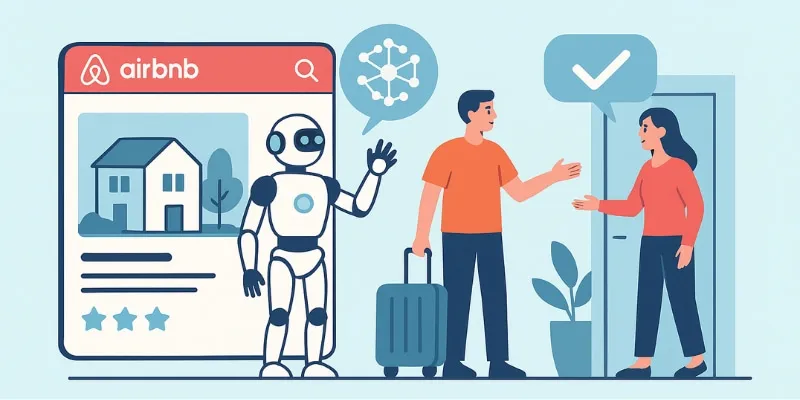
These are the mistakes that most often cost hosts their Superhost status.
The first mistake is slow nighttime responses. International guests book from every time zone. A message sent at 3 AM your time that goes unanswered for 8 hours counts against your response rate and makes that guest feel ignored before they even arrive. AI messaging solves this completely.
The second mistake is calendar sync failures. Listing the same property on Airbnb and Booking.com without real-time calendar synchronization inevitably leads to double bookings. When you must cancel one reservation, your cancellation rate spikes above 1 percent instantly.
The third mistake is inconsistent cleaning quality. When different cleaning crews handle turnovers without standardized checklists and quality verification, some turnovers fall below expectations. One poorly cleaned property generates a 3-star review that takes weeks to recover from.
The fourth mistake is outdated listing information. Your listing says the pool is heated, but it has not been since last summer. Your description mentions a Nespresso machine, but it broke three months ago. These accuracy gaps generate negative reviews that feel unfair but are entirely preventable.
The fifth mistake is ignoring the checkout review request. Most hosts let the 14-day review window expire without encouraging happy guests to leave reviews. This means your review pool is biased toward unhappy guests who are more motivated to share their experience. The fix is a multi-touch approach: send a warm thank-you message shortly after checkout mentioning how much their feedback helps you improve, and consider leaving a small handwritten note at the property expressing how guest reviews keep you motivated. Gentle nudges work better than direct requests: never explicitly ask for a 5-star review, as it feels transactional and can backfire. Let your service speak for itself. A well-timed automated review request after checkout helps more of your satisfied guests actually leave one.
The sixth mistake is leaving unfair negative reviews unchallenged, or challenging the wrong ones. Airbnb removes a review only when it breaks its Reviews Policy: irrelevant to the stay, fake, extorted or biased, written to harm a competitor, retaliatory after a policy enforcement, or in breach of the Content Policy. A review you simply consider inaccurate, or a star rating you disagree with, does not qualify. Choose your disputes carefully: Airbnb’s Superhost page now states that it may suspend or withhold Superhost status for hosts with high review removal rates or high host-initiated cancellation rates. Nowistay’s review dispute tool checks a review against the Reviews Policy and prepares the removal request for the cases that qualify.
The seventh mistake is scaling too fast without systems. Adding 10 new properties in a month without proper onboarding processes, knowledge bases, and automation tools dilutes your quality across the entire portfolio. Each underperforming property drags down your aggregate Superhost metrics.
There was a time when maintaining Superhost status across a large portfolio required a proportionally large team. Managing 50 properties to Superhost standards meant hiring several full-time communication agents, a dedicated cleaning coordinator, and a quality assurance manager. The cost structure made Superhost economically questionable for scaling property managers.
AI has fundamentally changed this equation. Here is how modern AI tools address each Superhost criterion.
For response rate and response time, an AI co-host like Nowistay answers most guest messages on its own, in about a minute on average, around the clock and in more than 90 languages, and hands the rest to you. This alone protects your Superhost status from the most common disqualification trigger. But it goes further: because the AI responds in about a minute rather than within the 24-hour window Airbnb requires, fewer guests drift to another listing while they wait, which feeds back into more bookings (criterion 1).
For cancellation prevention, platforms that synchronize your calendar across Airbnb, Booking.com, and other channels in real-time eliminate the double-booking risk that causes most host-initiated cancellations. When your AI also handles calendar availability inquiries from guests, it ensures accurate information flows at every touchpoint.
For maintaining a 4.8+ rating, AI contributes in multiple ways. First, fast and accurate communication improves the communication sub-rating directly. Second, AI-powered listing audit tools identify accuracy gaps before guests experience them. Third, automated cleaning coordination ensures consistent turnover quality. Fourth, automated review solicitation increases the volume of positive reviews from satisfied guests. Fifth, negative review removal tools help you identify and contest unfair reviews that drag your average down.
For booking volume, the combined effect of faster response times (which improve search ranking), better reviews (which improve conversion), and optimized listings (which improve click-through rates) naturally generates more bookings. Superhost status itself then creates a virtuous cycle: the badge makes guests more likely to book, which generates more reviews, which maintains the badge.
The net result is that a single property manager with AI tools can maintain Superhost standards across 50, 80, or even 100+ properties, a scale that previously required a dedicated team.
Since Airbnb evaluates Superhost status every quarter, building a quarterly maintenance routine ensures you never lose your badge by surprise.
At the start of each quarter, check your Superhost progress dashboard in Airbnb (found in your hosting profile under Performance). Review each of the four metrics and identify any that are trending close to the threshold. If your rating is at 4.81, you have less room for error than if it is at 4.92.
Review your listing content quarterly. Walk through each property and compare the actual state to what your listing describes. Update photos if furniture, decor, or amenities have changed. Refresh your descriptions to reflect seasonal offerings. Also review your house rules: clearly outlined rules set guest expectations and prevent the misunderstandings that generate negative reviews. If you use an AI listing audit tool, run audits on all properties at the start of each quarter.
Audit your knowledge base quarterly. If you use an AI co-host, review the information it draws from to answer guest questions. Update check-in procedures, WiFi passwords, local recommendations, seasonal activity suggestions, and any property-specific quirks. The more accurate your AI’s knowledge base, the fewer escalations and guest complaints you will experience.
Review your cleaning and turnover processes quarterly. Check in with your cleaning teams, review guest feedback related to cleanliness, and ensure your quality standards are being met consistently. For property managers using automated cleaning coordination, verify that task assignments and team notifications are functioning correctly.
Analyze your review distribution quarterly. Look at your lowest-rated stays and identify patterns. Are the same properties generating disproportionate negative reviews? Are specific issues (cleanliness, noise, accuracy) recurring? Address the root causes rather than treating symptoms.
Individual hosts managing 1 to 3 properties face a fundamentally different Superhost challenge than property managers and concierge services managing 20, 50, or 200 listings. For individual hosts, the criteria are personal: your own responsiveness, your own property quality, your own attention to detail. For property managers, the criteria are systemic: can your organization consistently deliver Superhost-quality performance across every property, every guest, every day?
The key insight for multi-listing operations is that your weakest property determines your Superhost eligibility. If 49 of your 50 properties run flawlessly but one consistently generates 4.2-star reviews due to a difficult neighbor or aging furnishings, that single property will drag your overall average below 4.8. Identify your underperformers early and either bring them up to standard or remove them from your portfolio.
For concierge services that manage properties on behalf of owners, the challenge is compounded by the fact that you do not fully control the product. An owner who refuses to replace a broken dishwasher or invest in new linens creates a guest experience problem that reflects in your Superhost metrics. This is where transparent owner reporting and clear service-level agreements become essential. Show owners the direct link between property investment and review scores, and demonstrate how their property’s performance affects the Superhost status that benefits all properties in your portfolio.
Team consistency is the other multi-listing challenge. When multiple team members handle guest communication, cleaning coordination, and check-in support, variability creeps in. Different team members give different answers, apply different levels of care, and make different judgment calls. AI standardizes the guest communication layer, ensuring every guest receives the same quality of response regardless of which property they booked or what time they messaged.

Superhost status is not just a static badge. It creates a compounding advantage that accelerates your business growth over time.
The first compounding benefit is search visibility. Airbnb says Superhosts get more visibility, and the badge appears on your listings and your profile. This increased visibility leads to more page views and more bookings, which in turn generates more reviews, which helps maintain your rating above 4.8. The flywheel spins faster with each quarter you maintain Superhost status.
The second compounding benefit is pricing power. Superhosts can often charge more than comparable non-Superhost properties in the same area. Guests are willing to pay a premium for the trust and quality assurance that the Superhost badge represents. Across a 20-property portfolio, even a modest premium adds up over 12 months.
The third compounding benefit is guest quality. Superhost properties tend to attract more experienced, responsible travelers who have learned to filter for quality. Better guests mean fewer incidents, fewer complaints, fewer damaged properties, and better reviews, which further reinforces your Superhost status.
The fourth compounding benefit is owner acquisition. For property managers and concierge services, Superhost status is a powerful sales tool when pitching to property owners. Owners want their property managed by someone with a proven track record of excellence, and the Superhost badge provides exactly that proof. Every new property you add to a well-run Superhost portfolio benefits from the reputation you have built.
Airbnb also gives Superhosts direct perks, listed on its Superhost program page: priority support when you contact Airbnb, a USD 100 coupon each time you keep the status four quarters in a row, and an extra 20% on top of the standard host referral bonus. While these perks are modest compared to the business benefits, they signal Airbnb’s commitment to recognizing and rewarding top performers.
To prepare useful guest information and send it through Nowistay, see these guides: How to set up automated guest (& team) messages ; How to create the welcome guide with AI?.
How long does it take to become a Superhost? For new hosts, the earliest you can qualify is at your first quarterly assessment after meeting all four criteria. You do not need 12 months of hosting: a new host who completes 10 stays (or 3 stays totalling 100 nights) with a 4.8 rating, no cancellation and replies to 90% of new messages within 24 hours qualifies at the next assessment date, and the badge can take up to a week to appear.
When does Airbnb check Superhost status? Every 3 months, in a 7-day assessment period that starts on 1 January, 1 April, 1 July and 1 October, based on the past 12 months across all the listings you own. If a guest stays during an assessment period and their review is published after it ends, the rating counts toward the next period.
Can I lose Superhost status? Yes. Airbnb re-evaluates your performance every quarter. If you fall below any of the four criteria thresholds at the next assessment date, you lose your Superhost badge until the following quarter when you meet all criteria again.
Does Superhost apply to individual listings or to my account? Superhost status applies to your entire account, not individual listings. If you meet the criteria across all your owned listings, you receive the badge on every listing. However, underperformance on any single listing can drag your aggregate metrics below the threshold.
Can co-hosts get Superhost status? No. Only listing owners are eligible for Superhost status based on their owned listings. If you are a co-host who also owns separate listings, your Superhost eligibility is based only on the listings you own, not the ones you co-host. The same applies to experience and service hosts.
How does Superhost work for property managers? If you are the listing owner for all the properties you manage (which is the case for many concierge services and property management companies), your Superhost status is evaluated across all those listings. If property owners retain listing ownership and add you as co-host, those listings do not count toward your Superhost eligibility.
Is Superhost status worth pursuing for large portfolios? Usually, yes. Because the status covers your whole account, the badge shows on every listing you own, so its visibility and trust benefits apply across the portfolio. Airbnb does not publish occupancy or revenue figures for Superhosts, so measure the effect on your own listings.
Becoming and maintaining Airbnb Superhost status in 2026 is not about being a perfect host in some abstract sense. It is about building systems that consistently deliver four measurable outcomes: enough bookings, fast responses, zero cancellations, and high ratings. These are engineering problems, not hospitality mysteries.
For individual hosts with 1 to 3 properties, manual effort and good habits can be enough to achieve Superhost status. For property managers and concierge services managing 10, 50, or 200 properties, the only reliable path to consistent Superhost performance is automation: specifically, AI-powered tools that handle guest communication, coordinate operations, optimize listings, and manage reviews at a scale that no human team can match economically.
The hosts and property managers who will dominate Airbnb in 2026 and beyond are those who treat Superhost not as a goal but as a baseline. They are the ones who set up their AI co-host, optimize their listings, automate their cleaning coordination, and then focus their human energy on the guest experiences and business relationships that no AI can replace. The badge follows naturally.
Sign up free. With AI handling response time and review prompts at scale, the 90% response-rate threshold becomes much easier to hold, quarter after quarter.
Start free trial

Over 25 years of experience in real estate investing and a recognized expert in short-term rental automation. Bassel helps property managers increase revenue, cut operating costs, and deliver 5-star guest experiences using AI-powered tools he built from firsthand hosting experience.
